
Insider Insights
"Our front desk team frequently visits Nartiang Monoliths. We highly recommend heading there early in the morning to beat the tourist rush and catch the best lighting for photography. Need a reliable taxi or guided tour? Just ask us at the reception before you head out!"
The Stonehenge of Meghalaya-an ancient garden of massive stone pillars erected by the Jaintia Kings.
The Nartiang Monoliths stand as one of the most significant archaeological and cultural sites in Northeast India, representing the largest and most impressive collection of megalithic structures in the Khasi and Jaintia Hills region of Meghalaya. Located in Nartiang village, approximately 18 kilometers north of Jowai, this remarkable "Garden of Stones" has been officially recognized as a Monument of National Importance by the Archaeological Survey of India, cementing its status as a treasure of India's ancient heritage.
Historical Significance and the Jaintia Kingdom
The monoliths of Nartiang date back to the golden era of the Jaintia Kingdom, which flourished from approximately 1500 CE until the British annexation in 1835. During this period, Nartiang held special importance as the summer capital of the Jaintiapur kingdom. While the winter capital was located in Jaintapur (now in present-day Bangladesh), the Jaintia kings and their courts would migrate to Nartiang during the warmer months to escape the heat and humidity of the plains.
This dual-capital system was common among many kingdoms in the region, allowing rulers to take advantage of different climatic zones throughout the year. Nartiang's elevation and cooler climate made it an ideal summer retreat, and its strategic location in the hills provided defensive advantages. The concentration of monoliths at Nartiang reflects the site's political and religious importance during the kingdom's heyday.
The tradition of erecting megalithic monuments in this region represents one of the world's few living megalithic cultures. While most famous megalithic sites like Stonehenge in England or the menhirs of Brittany in France are ancient and no longer part of active cultural practice, the megalithic tradition in Meghalaya continued into the early colonial period and remains part of living cultural memory. Community elders in Nartiang and surrounding villages can still recount the purposes and stories associated with specific stones, providing a direct link to this ancient practice.
The Stones: Engineering Marvels of Their Time
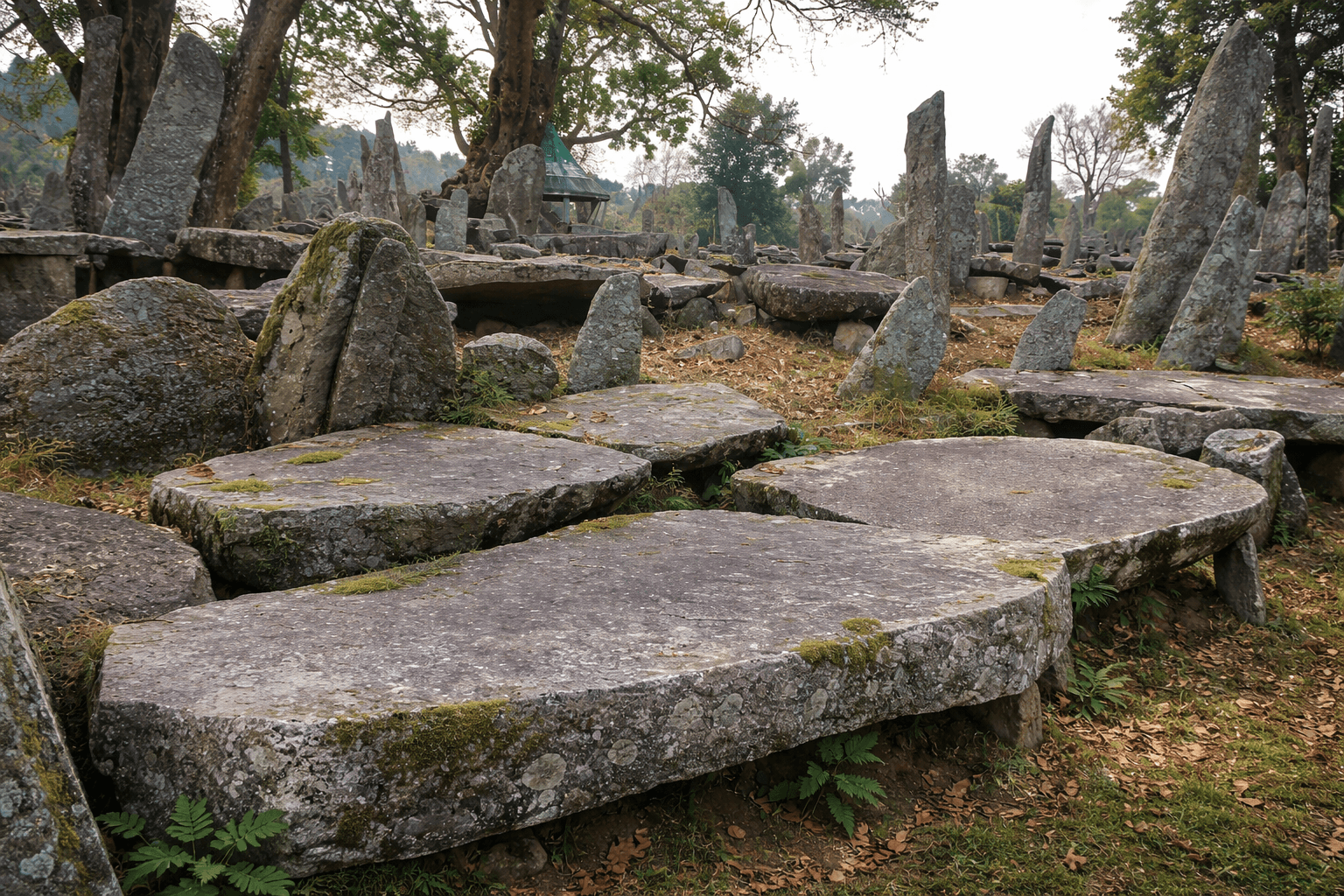
The Nartiang Monolith complex contains hundreds of standing stones (menhirs, called "Moo Shynrang" in the local Pnar language) and flat table-stones (dolmens, called "Moo Kynthai"). These megalithic structures vary dramatically in size, from relatively modest stones a meter or two in height to truly massive monuments that tower over visitors.
The centerpiece and most famous structure at Nartiang is the "Moo Long Syiem," which translates to "Stone of the King." This towering menhir stands approximately 8 meters (26 feet) high and measures about 2 meters in width. It is widely believed to be the tallest megalith in the world erected by a single culture in this traditional manner, making it not just a regional but a global monument of significance. The Moo Long Syiem dwarfs visitors who stand beside it, creating a powerful sense of the engineering capabilities and organizational capacity of the Jaintia society that erected it.
The sheer physics of moving and erecting these massive stone monoliths without modern machinery represents an extraordinary feat of ancient engineering. The largest stones at Nartiang weigh many tons-conservative estimates place the weight of the Moo Long Syiem at 20-30 tons or more. These enormous granite slabs had to be quarried, shaped, transported over significant distances (the nearest suitable granite quarries are several kilometers away), and then carefully raised into vertical positions.
The process of erecting such stones would have required sophisticated understanding of leverage, the use of earthen ramps, careful coordination of large groups of workers, and possibly the use of wooden scaffolding and pulley systems. Historical accounts and local tradition suggest that entire communities would participate in the erection of major monoliths, with the work taking weeks or even months to complete. The successful erection of a large stone would be accompanied by elaborate ceremonies and celebrations that reinforced community bonds and religious beliefs.
Cultural Meaning and Ancestral Connections
The megalithic structures at Nartiang served multiple interconnected purposes within Jaintia society, functioning simultaneously as historical records, religious monuments, and markers of social status. Understanding these purposes helps appreciate the site's cultural complexity.
The menhirs (standing stones) were primarily dedicated to male ancestors and commemorated important male members of the community, particularly kings, warriors, and clan leaders. Each stone served as a physical representation of a specific individual or group of individuals, keeping their memory alive across generations. The height and grandeur of a stone reflected the importance and achievements of the person or persons it commemorated.
The dolmens (flat table-stones resting on smaller supporting stones) were dedicated to female ancestors, particularly important matriarchs within the clan system. The Pnar and Khasi societies of Meghalaya are matrilineal, meaning descent and inheritance pass through the female line. Despite this matrilineal structure, the tradition of erecting dolmens for women appears to have been less common than erecting menhirs for men, possibly because women's status was expressed through other means within the social system.
Beyond commemorating individuals, the monoliths served as markers of significant historical events. Many stones were erected to celebrate military victories, the successful conclusion of important hunts, the establishment of peace treaties, or other momentous occasions in the kingdom's history. Each stone thus functions as a kind of three-dimensional history book, recording events that shaped the community.
The religious significance of the monoliths cannot be overstated. In traditional Pnar belief systems, the stones served as bridges between the physical world of the living and the spiritual realm of ancestors. They were focal points for ceremonies and rituals that maintained the connection between the living community members and their forebears. Annual ceremonies were held at the monolith sites, during which offerings would be made, prayers recited, and the stories of the ancestors retold to younger generations.
Legends and the Giant Mar Phalyngki
The monoliths of Nartiang are enveloped in a rich tapestry of legends and folklore that add layers of meaning to the physical stones. The most prominent of these legends concerns Mar Phalyngki, a figure who appears in numerous stories throughout the Jaintia Hills region and is variously described as a giant, a king, a warrior, and a culture hero.
According to one popular legend, Mar Phalyngki possessed extraordinary strength and stature that set him apart from ordinary mortals. One day, while Mar Phalyngki was at the market in Raliang village (another important historical site in the Jaintia Hills), he was caught in a sudden rainstorm. Lacking an umbrella, he looked around for shelter and noticed the large stone slabs that formed part of the market structure. With his superhuman strength, Mar Phalyngki simply plucked one of these massive slabs from its place and held it over his head as a makeshift umbrella, protecting himself from the rain.
When the storm passed and the sun returned, Mar Phalyngki continued on his journey to Nartiang. Rather than carrying the heavy stone slab all the way back to Raliang, he decided to plant it in the ground at Nartiang, marking the spot where the rain had stopped. This stone, according to the legend, became one of the prominent monoliths in the Nartiang complex, forever commemorating this casual display of Mar Phalyngki's strength.
While this legend clearly contains fantastical elements-no human, regardless of strength, could lift a multi-ton stone slab as an umbrella-it serves important cultural functions. The story emphasizes the extraordinary nature of the monoliths themselves and the remarkable people who created them. It also demonstrates how legendary figures like Mar Phalyngki serve as explanatory frameworks for monuments whose actual origins have become obscured by time.
Other legends at Nartiang speak of stones erected by Mar Phalyngki to commemorate his victories in battle, his successful hunts of dangerous animals, and his role in defending the Jaintia kingdom from invaders. These stories, whether historically accurate or not, preserve cultural values related to courage, strength, leadership, and the defense of community-values that the Pnar people continue to honor today.
The Megalithic Complex: Layout and Significant Stones
Walking through the Nartiang Monolith site is an experience that evokes a sense of stepping back in time. The stones are arranged in a loosely organized pattern that reflects both the chronological order of their erection and their various purposes and dedicatees. Unlike precisely planned archaeological sites, the Nartiang complex has an organic, evolved quality that reflects centuries of continuous use and addition.
The site covers a substantial area, and dozens upon dozens of stones of various sizes create a virtual forest of megaliths. Some stones stand in isolation, commanding attention through their size and positioning. Others cluster in groups, suggesting they commemorate related individuals or events. Still others are arranged in what appear to be deliberate patterns or alignments, though the specific meanings of these arrangements are not always clear today.
The surface of many stones is covered with orange and grey lichens, creating beautiful natural patterns that emphasize the great age of the monuments. These lichens grow extremely slowly, and their extensive coverage indicates that the stones have stood in their current positions for centuries. In some cases, the lichens partially obscure faint carvings or markings on the stones, adding an element of mystery about what additional information might lie hidden beneath the biological growth.
Several stones beyond the famous Moo Long Syiem warrant special attention. One impressive dolmen features a massive flat slab balanced on several smaller supporting stones, creating a table-like structure large enough to provide shelter for a dozen people. Local guides explain that this particular dolmen was dedicated to an important female ancestor and that ceremonies honoring her were conducted beneath the sheltering stone.
Another notable feature is a group of smaller menhirs arranged in what appears to be a deliberate arc or curve. Local interpretation suggests this arrangement may represent a ceremonial space or gathering place where community rituals were conducted, with each stone representing a different clan or lineage group participating in the ceremonies.
The Nartiang Durga Temple: Hindu-Indigenous Syncretism
Adjacent to the monolith complex stands the Nartiang Durga Temple, a Hindu shrine with a history extending back approximately 500 years. This temple adds another layer of cultural and religious significance to the Nartiang site and illustrates the complex interplay between indigenous Pnar beliefs and Hinduism in the region.
The temple is dedicated to Goddess Durga and is recognized as one of the 51 Shakti Peethas of Hinduism-sacred sites where, according to Hindu mythology, parts of the goddess Sati's body fell to earth. Specifically, Nartiang is believed to be where the goddess's left thigh fell, making it a destination for Hindu pilgrims from across India.
The presence of this important Hindu temple alongside the indigenous megalithic monuments reflects the historical reality that the Jaintia kingdom, while maintaining its indigenous cultural practices, also adopted and adapted aspects of Hindu religion and culture. The Jaintia kings patronized both Hindu temples and traditional megalithic practices, seeing no contradiction between these different religious expressions.
The temple becomes particularly active during Durga Puja, the annual Hindu festival celebrating the goddess. During this period, the normally quiet village of Nartiang transforms into a site of pilgrimage and celebration, with devotees coming from far and wide to worship at the temple. This creates an interesting juxtaposition between the ancient, silent stones and the vibrant, living religious tradition still actively practiced.
The architectural style of the temple reflects local building traditions adapted to Hindu religious requirements. The structure features elements typical of Northeast Indian temple design while incorporating local materials and construction techniques. The temple courtyard provides an interesting vantage point from which to view the monoliths, and many visitors appreciate the opportunity to experience both the ancient megalithic tradition and the living Hindu tradition in a single visit.
Conservation Challenges and Efforts
As a site of national importance, the Nartiang Monoliths face various conservation challenges that require ongoing attention and resources. The Archaeological Survey of India, in collaboration with local authorities and community organizations, works to preserve the site for future generations while managing the increasing tourism interest.
One significant challenge is environmental weathering. The stones, while incredibly durable, are subject to gradual erosion from rain, wind, and temperature fluctuations. The growth of lichens, while adding to the aesthetic appeal, can also contribute to surface degradation over very long timescales. More concerning is the growth of vegetation around and sometimes on the stones, with tree roots potentially destabilizing or damaging the monuments.
Tourism, while bringing economic benefits and raising awareness about the site's importance, also presents conservation challenges. Increased foot traffic contributes to soil erosion around the base of stones, and there is always a risk of vandalism or well-intentioned but damaging behavior such as climbing on the stones. Educational efforts aimed at visitors, explaining the significance and fragility of the monuments, form an important part of conservation strategy.
The site has implemented measures such as defined pathways to direct visitor movement, protective barriers around the most significant stones, and informational signage that educates while setting behavioral expectations. Local guides, many of whom are descended from the communities that erected these stones, play a crucial role in conservation by explaining the cultural significance and encouraging respectful behavior.
Visitor Experience and Modern Significance
For modern visitors, the Nartiang Monoliths offer a unique window into ancient Northeast Indian civilization and a chance to connect with living cultural traditions. Unlike many archaeological sites that feel disconnected from contemporary life, Nartiang remains culturally relevant to local Pnar communities, adding depth to the visitor experience.
The site is accessible year-round, with the cooler, drier months from October to March offering the most comfortable conditions for exploration. The walk through the monolith complex typically takes 45 minutes to an hour for a thorough visit, though photography enthusiasts and history buffs often spend considerably longer.
The best way to experience the site is with a knowledgeable local guide who can explain the stories, legends, and cultural significance associated with different stones. These guides, often community members with deep roots in Nartiang, bring the stones to life with their narratives, transforming what might otherwise be impressive but silent monuments into vivid historical actors.
The play of light on the stones throughout the day creates different moods and photographic opportunities. Morning light, coming from the east, illuminates the lichen-covered surfaces with a warm glow, while afternoon and evening light creates dramatic shadows that emphasize the three-dimensional forms of the stones. Photographers find particular success with wide-angle compositions that capture the scale and number of the monuments.
For scholars and serious students of archaeology, anthropology, and history, Nartiang represents an invaluable resource for understanding megalithic cultures and traditions. The site has been the subject of numerous academic studies, and ongoing research continues to reveal new insights about the construction techniques, chronology, and cultural significance of the monuments.
Key Highlights
- ✧Largest collection of megalithic monuments in Meghalaya and Northeast India
- ✧Home to "Moo Long Syiem"-an 8-meter tall menhir believed to be the world's tallest traditionally erected monolith
- ✧Monument of National Importance officially recognized by Archaeological Survey of India
- ✧Historical summer capital of the Jaintia Kingdom (1500 CE - 1835 CE)
- ✧Contains both menhirs (standing stones for male ancestors) and dolmens (table stones for female ancestors)
- ✧Located adjacent to 500-year-old Nartiang Durga Temple, one of 51 Shakti Peethas
- ✧Living megalithic culture with direct community memory of traditions and meanings
- ✧Hundreds of stones covered in orange and grey lichen indicating centuries of age
- ✧Rich folklore including legends of the giant-king Mar Phalyngki
- ✧Unique opportunity to witness Hindu-indigenous cultural syncretism
When to Visit
Excellent for visits year-round as the stones and temple are not weather-dependent. October to March offers the most comfortable weather for exploration with cooler temperatures and minimal rain. The monsoon season (June-September) adds a mystic charm with mist and rain highlighting the moss-covered stones, though paths may be slippery. Durga Puja festival (September/October) offers unique cultural experience with active temple ceremonies.
How to Reach
Nartiang village is located 18 km north of Jowai town. The road is scenic, winding through pine forests and traditional Pnar villages. Private taxis or hired vehicles can be arranged from Jowai market for the 30-minute journey. The road is well-maintained and accessible year-round. The monolith site is located within the village, a short walk from where vehicles can park. Public transport is limited-hiring a vehicle is recommended.
Essential Travel Tips
- 1Visit the adjacent Nartiang Durga Temple to experience both indigenous and Hindu traditions in one location.
- 2Respect the sacred nature of the stones-do not climb on them as they are venerated by local clans and communities.
- 3Hire a local guide from Nartiang village to hear the specific stories and legends behind prominent stones-this greatly enriches the experience.
- 4Allocate at least 45 minutes to 1 hour for a thorough exploration of the complex-longer if you're photographing.
- 5Best photography light occurs in morning (8-10 AM) or late afternoon (4-6 PM) when sunlight creates dramatic shadows.
- 6Wear comfortable walking shoes as the site involves walking on uneven ground between stones.
- 7Bring water and sun protection-limited shade available among the stones.
- 8The site has minimal facilities-use washrooms in Jowai before visiting.
- 9Ask permission before photographing any local ceremonies or people-respect cultural sensitivities.
- 10Combine your visit with other nearby attractions like Krang Suri Waterfalls or Thadlaskein Lake for a full day itinerary.
- 11Support local guides and the community-guide fees are nominal and directly benefit stone custodians.
- 12Learn a few words in Pnar language (local dialect)-guides appreciate the cultural interest.
- 13Visit during Durga Puja for a special cultural experience, but expect crowds and active religious ceremonies.
- 14Don't touch or remove lichens from stones-they are part of the monument's historical character.
- 15Carry a good camera-the site is highly photogenic with numerous composition opportunities.
- 16Read about Jaintia Kingdom history before visiting to appreciate the historical context of the monuments.
Explore Nartiang Monoliths
Make Kaizen Stay-Inn your luxurious basecamp. Return from your exploration to hot showers, pristine rooms, and exceptional local cuisine.